
Skip to content
Skip to content

Golden Triangle

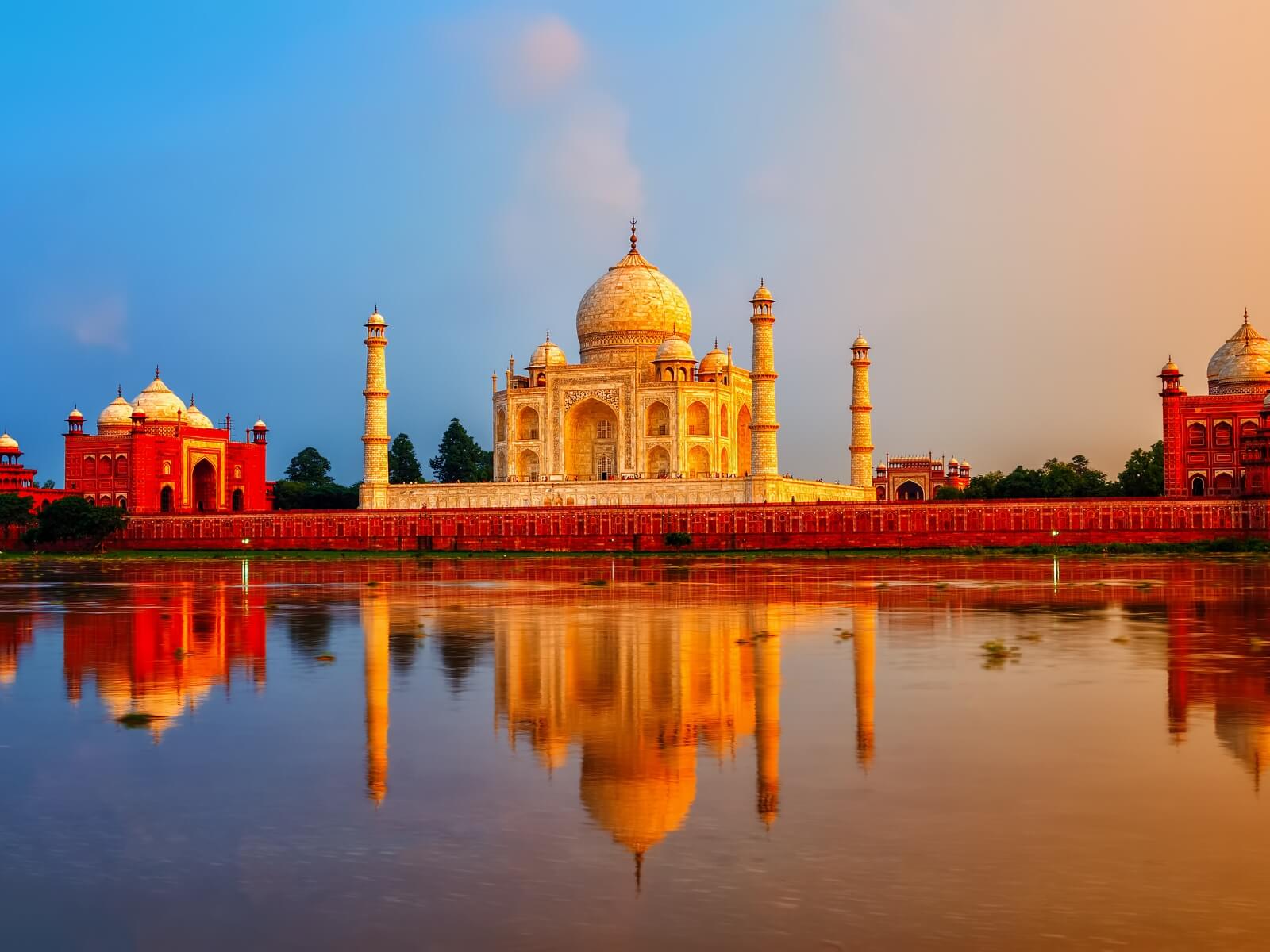
Taj Mahal Agra, part of the North India Golden Triangle tour circuit
Taj Mahal at sunrise
Altitude
560 m
Best season
October–March

About Golden Triangle

Few travel routes anywhere in the world carry the instant recognition of the Golden Triangle, the classic arc connecting Delhi, Agra and Jaipur that has introduced generations of first-time visitors to India. It is, in many ways, the country's most complete opening chapter: a Mughal capital, a marble monument to eternal love, and a fortified pink desert city, all within a comfortable few hours' drive of one another. That efficiency is exactly why golden triangle tour packages remain the single most booked circuit for international visitors, and why so many repeat travellers still return to walk it again. A well-paced golden triangle itinerary 5 days is the industry standard, generous enough to properly explore each city without the trip feeling like a checklist, and this rhythm underpins most versions of the classic Delhi Agra Jaipur tour package sold today, whether travellers prefer to book 5-day Golden Triangle trip options as a fixed itinerary or build something more bespoke. For those keen to see India's wildlife alongside its monuments, extending the loop with a golden triangle with ranthambore add-on has become increasingly popular, and operators now routinely package it as a Golden Triangle with Ranthambore safari package, or market it more directly to enthusiasts as a Delhi Agra Jaipur tiger tour, recognising that a tiger sighting has become just as memorable to many travellers as the Taj Mahal itself. Understanding the best time to visit golden triangle india also shapes the experience considerably, since Delhi and Agra's summers run brutally hot, and the comfortable window from October through March remains, by far, the season when most of this circuit's tour packages sell out first.

Delhi – The Capital Gateway

  • Red Fort – The imposing Mughal fortress that once housed the seat of imperial power, its red sandstone ramparts among the most recognisable images of Old Delhi.
  • Qutub Minar – A soaring 12th-century minaret and UNESCO World Heritage Site, marking the beginning of Delhi's long layered history of successive empires.
  • Humayun's Tomb – A precursor in design and scale to the Taj Mahal itself, this garden tomb is a quieter but equally striking introduction to Mughal architecture.
  • India Gate and Lutyens' Delhi – The stately war memorial and the wide colonial-era avenues surrounding it capture Delhi's transition into a modern national capital.
  • Chandni Chowk – Old Delhi's dense, chaotic market lane, essential for street food, spice trading and a genuine sense of the city's older rhythms.

Agra – Monument to Eternal Love

  • Taj Mahal – The reason most travellers first book a trip along this route, a white marble mausoleum built by Shah Jahan for his wife Mumtaz Mahal, and rightly considered one of the most beautiful buildings on earth.
  • Agra Fort – A red sandstone fortress-palace on the banks of the Yamuna, offering distant views of the Taj Mahal and a rich sense of the Mughal court that once ruled from within its walls.
  • Fatehpur Sikri – A remarkably preserved Mughal capital built and then abandoned within a matter of decades, located a short drive outside Agra and well worth the detour.
  • Mehtab Bagh – A garden directly across the river from the Taj Mahal, prized for sunset views and a quieter, less crowded perspective on the monument.

Jaipur – The Pink City

  • Amer Fort – A majestic hilltop fort overlooking Maota Lake, celebrated for its mirrored Sheesh Mahal and commanding views over the surrounding hills.
  • City Palace – A sprawling palace complex still partly home to Jaipur's royal family, blending Rajput and Mughal architectural styles across its courtyards and museums.
  • Hawa Mahal – The honeycombed "Palace of Winds," among the most photographed facades in India, originally designed to let royal women observe street life unseen.
  • Jantar Mantar – A UNESCO-listed astronomical observatory of oversized stone instruments, standing right alongside the City Palace in the heart of the old city.
  • Jaipur's Bazaars – Bapu Bazaar and Johari Bazaar round out the Golden Triangle experience with textiles, gemstones and traditional jewellery, a fitting final chapter to the circuit.

Extending the Circuit

The classic three-city loop is only the starting point for many travellers. A golden triangle with udaipur tour has become a favoured extension for those wanting to add lakes and romance to the itinerary, typically sold as a Golden Triangle with Udaipur package or laid out in full as a Delhi Agra Jaipur Udaipur itinerary that tacks the City of Lakes onto the end of the standard route. Others prefer a spiritual detour, and a golden triangle tour with pushkar routes travellers through the sacred lake town en route to or from Jaipur, pairing temple visits with the circuit's more famous monuments. Wildlife enthusiasts, as noted, often lean toward the Ranthambore extension, while travellers chasing a more indulgent experience increasingly opt for a golden triangle luxury tour package, staying in heritage havelis and palace hotels along the route rather than standard city accommodation.

Tours here

No tours published for Golden Triangle just yet.

We plan every itinerary to order — tell us where you want to go and when.

Getting to Golden Triangle

By air

Most international and long-haul domestic travellers begin in Delhi, whose international airport is the primary gateway into this circuit, with onward travel to Agra and Jaipur typically completed by road or a short domestic flight for those pressed for time.

By rail

High-speed trains such as the Gatimaan Express connect Delhi and Agra in under two hours, making the train a genuinely fast and comfortable option for the first leg of the journey, while regular services also link Jaipur back to Delhi to complete the loop.

By road

The road route remains the most popular way to experience the Golden Triangle, since it allows for stops at places like Fatehpur Sikri that trains simply bypass. A dedicated golden triangle tour by car with driver is the standard way most operators run this circuit, and travellers researching a Golden Triangle private driver package will find it typically includes a fixed vehicle and driver for the full journey, removing the need to arrange fresh transport in each city; those planning the route independently often specifically search for a Delhi to Jaipur via Agra tour by car to map out the driving distances and stopovers involved.

Permits & documents

No special domestic permit is required to travel the Golden Triangle circuit; standard entry tickets apply at monuments such as the Taj Mahal, Agra Fort and Amer Fort. International visitors should ensure their Indian visa (commonly an e-Visa for tourist travel) is arranged well in advance of arrival, since this is a prerequisite for entry rather than a circuit-specific requirement.

Where to stay in Golden Triangle

  • Delhi – Connaught Place and the diplomatic enclave of Chanakyapuri offer a strong mix of business and luxury hotels, well suited to travellers beginning or ending their trip in the capital.
  • Agra – Properties near the Taj East and West Gates offer walking or short-drive access to the monument, with several higher-end hotels along the Taj-facing stretch offering monument views from their rooftops.
  • Jaipur – The Amer and Nahargarh foothills host some of the city's most celebrated heritage hotels, ideal for travellers rounding out a golden triangle luxury tour package with a genuinely royal stay.
  • Udaipur and Pushkar (for extended circuits) – Lakeside havelis in Udaipur and simple ghat-facing guesthouses in Pushkar offer a natural change of pace for travellers extending beyond the core three cities.
  • En-route stays near Fatehpur Sikri – A small selection of properties near the site suit travellers wanting to explore at a leisurely pace rather than treating it purely as a stopover.

Frequently asked questions

How many days are needed for the Golden Triangle?

Most travellers find five to six days sufficient to comfortably cover Delhi, Agra and Jaipur without feeling rushed, which is why a golden triangle itinerary 5 days has become the industry-standard length for this circuit, though it can be shortened to a brisk three or four days or extended well beyond a week with additional cities.

What is the itinerary for a 5-day Golden Triangle tour of India?

A typical 5-day plan spends the first day or two in Delhi covering the Red Fort, Qutub Minar and Humayun's Tomb, moves to Agra for a day to see the Taj Mahal, Agra Fort and Fatehpur Sikri, and closes with two days in Jaipur exploring Amer Fort, City Palace and Hawa Mahal before returning to Delhi.

How much does a Golden Triangle tour package cost?

Costs vary considerably based on hotel category, mode of transport and inclusions, with budget group tours being significantly more affordable than a golden triangle luxury tour package built around heritage and palace hotels; most golden triangle tour packages are priced across a wide range to suit different traveller budgets.

How to plan a Golden Triangle tour?

Planning generally starts with deciding trip length and travel style, whether a fixed classic delhi agra jaipur tour package, a self-driven route with a private car, or an extended circuit adding cities like Udaipur, Pushkar or Ranthambore, followed by booking accommodation and transport around the best time to visit golden triangle india for comfortable sightseeing.

What is the best time to visit the Golden Triangle?

The best time to visit golden triangle india is generally between October and March, when daytime temperatures across Delhi, Agra and Jaipur are considerably more comfortable for extensive outdoor sightseeing at forts and monuments.

Is the Golden Triangle worth visiting?

The Golden Triangle is widely considered one of the most rewarding introductions to India, combining a capital city, a world wonder in the Taj Mahal, and a vibrant royal city in Jaipur within a single, well-connected route, making it a strong starting point for first-time visitors and a rewarding return trip for those who've explored it before.

What is the best month to visit the Golden Triangle in India?

Among the broader October-to-March window, the months of November, December, February and March are often singled out as particularly pleasant, offering cool mornings and comfortable daytime temperatures without the denser winter fog that can occasionally affect Delhi and Agra in late December and January.

Where can I go for a 5 day trip?

A 5-day trip is ideally suited to the classic Golden Triangle route of Delhi, Agra and Jaipur, though travellers with a specific interest in wildlife or lakes over palaces might instead consider a shorter Rajasthan-focused loop, or a golden triangle with ranthambore extension that swaps a day of city sightseeing for a tiger safari.

Can I book a Golden Triangle tour package from Delhi?

Yes, Delhi is the standard starting and ending point for nearly all golden triangle tour packages, given its role as India's primary international gateway city, with most itineraries beginning with a day or two of Delhi sightseeing before continuing on to Agra and Jaipur.

What cities are in the Golden Triangle?

The Golden Triangle refers to Delhi, Agra and Jaipur, three cities that form a rough triangular route across northern India, each representing a distinct chapter of the country's Mughal and Rajput heritage.

What is the route of the Golden Triangle in India?

The classic route runs from Delhi south to Agra, roughly a three to four hour drive, then continues west from Agra to Jaipur, a journey of around five to six hours, before looping back north from Jaipur to Delhi to complete the triangle.

Why is the Golden Triangle India famous?

The Golden Triangle is famous for bringing together three of India's most iconic destinations, the historic capital of Delhi, the Taj Mahal in Agra, and the palaces and forts of Jaipur, within a single, well-connected and relatively short travel route, making it the most accessible way to experience the country's Mughal and Rajput heritage in one trip.